Of all of the topics we have discussed so far, Neuroscience
seemed the most distant to me. I know nothing about it, and the nothing I know
couldn’t possibly related to art. As it turns out, this is far from the truth.
Neuroscience concerns all studies of the mind and its inner
workings. Artists have long benefitted from our brains’ mechanics and assumptions.
Pablo Picasso once said, “we all know that Art is not truth. Art is a lie that
makes us realize truth, at least the truth that is given us to understand. The
artist must know the manner whereby to convince others of the truthfulness of
his lies” (CNN). When we see a painting, we know that it is two dimensional,
the canvas belies this fact. However, this doesn’t stop our minds from perceiving
the lines and shading to create a three-dimensional object in our mind.


In addition, artists also benefit from our mind’s
imaginations. Professor Vesna asserts that we only remember 5% of our dreams,
but of that sliver, humans have long idolized the creativity they experience in
their dreams. Sigmund Freud put a huge emphasis on sexuality and ego as the two
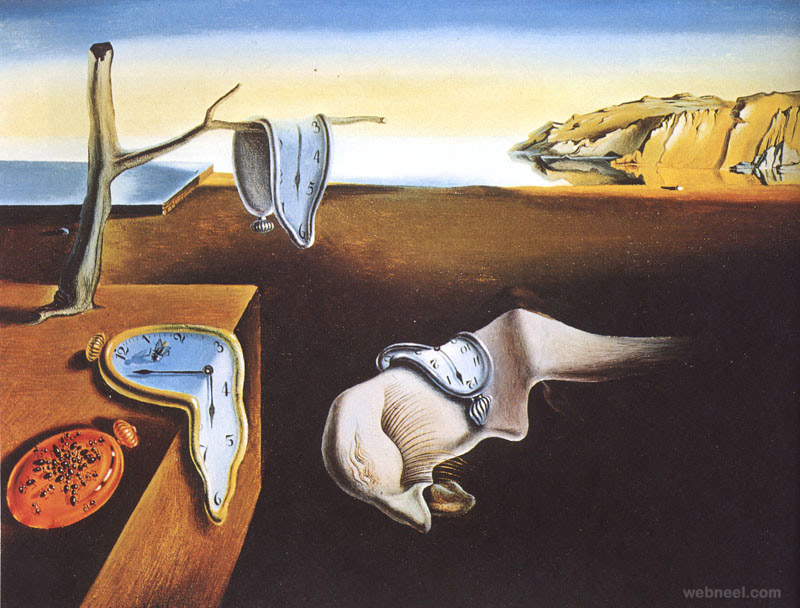
main motivations behind human pursuits, thoughts, and dreams. Surrealist
painter Salvador Dali famously painted his hallucinations. Freudian theory “underpins”
Dali’s work as a “formal and visual language capable of rendering his dreams”
(The Art Story). All this to say, Dali’s work has always been linked to Freud’s
psychoanalysis. So not only does art rely upon the artists own imaginations,
but also the imaginations of their audiences to appreciate and understand the
art.

Works Cited
"Sigmund Freud" Internet Encyclopedia of Philosophy. Web. 13 May 2016.
Landau, Elizabeth. "What the Brain Draws From: Art and Neuroscience." CNN. Cable News Network, 15 Sept. 2012. Web. 13 May 2016.
"Salvador Dali." The Art Story. Web. 13 May 2016.
"Sigmund Freud." Psychology History. Web. 13 May 2016.
Vesna, Victoria. “Toward a Third Culture: Being in Between.” Web.
Images


No comments:
Post a Comment