Tuesday, April 26, 2016
Sunday, April 24, 2016
Zombie Boy
In the video lecture about prosthetic limbs, I was reminded of a
plane ride I took last week with a team of nationally ranked wheelchair basketball
players. While sitting in the middle seat between two of the players, their
prosthetics lying under their chairs, I learned that nearly every player on the
team met in Camp Pendleton’s hospital after IED and spinal injuries. They also
told me that over the last few years, the comfortability and functionality of prosthetics
has made huge improvements, and they are much less expensive thanks to 3D
printing technology and the production of cheaper materials. I was amazed that
the combination of art, technology and medicine could result in something both
aesthetically impressive to onlookers, and life-changing for so many people. 
The video lectures address the fascination with
the human body that seems to span all cultures and generations. I was reminded
of Rick Genest, sometimes known as “Zombie Boy”, who I watched an interview of
a few years ago. He has gained notoriety for his head to toe tattoos of ribs, cartilage,
arteries and muscles drawn over where they would be beneath his skin. The
permanence of these tattoos is testimony to a continued fascination with the
human body in our world today. Genest was willing to display what he found to
be an expression of himself and his passions.
“It’s creativity, and it comes from the soul.”
This is what Genest said in an interview about his “walking art” and his recent
involvement in TV episodes, fashion shoots and live performances.
Between the Bodies Exhibits that continue to
garner support, the human fascination with preservation and praising of the
body as a work of art, and Rico the Zombie Boy, there is something inexplicably
dark, alluring, fascinating and mysterious about the human body and its
presence within art, science and medicine today.
Video Links:
https://www.youtube.com/watch?v=ZmeELC5EGv4
"MoMA Learning." MoMA. N.p., n.d. Web. 25 Apr. 2016.
"U.S. DEPARTMENT OF DEFENSE Media Photo Gallery." U.S. DEPARTMENT OF DEFENSE Media Photo Gallery. N.p., n.d. Web. 25 Apr. 2016.
Sunday, April 17, 2016
Flubber and Other Robotic-y things
In
lecture this week Professor Vesna claimed that the printing press led to the
first widespread dispersion of knowledge. For the first time, written works
could be mass produced and distributed. Gutenberg's invention accelerated the
spread of the Renaissance and brought economic prosperity to Western Europe.
Even from the 1450s, robotics and art have been linked.
Mass
production at first brought about a wider appreciation for art, especially
literature. But around 1900, technical reproduction of art was possible. Art
was no longer unique but commonplace. At this same time, photography began and
paintings were undermined forever. Walter Benjamin argues that the “semblance
of (art)’s autonomy disappeared forever”. Douglas Davis calls the
indistinguishable difference between original work and reproduction, “formally
chameleon”. That is to say, because we can so easily reproduce anything it is
hard to know what is legitimate art.
On
a similar note, artificial intelligence has long been the subject of science
fiction. But more and more it is becoming a real goal of tech companies
everywhere. Soon, the relationship between original life and and artificial
life could be just as indistinguishable, not necessarily in their looks but
their intelligent function. Theo Jansen is the perfect example of art and
robotics meeting. Jansen’s art focuses on lifelike sculptures that can perform
some of the living functions of human beings.
Finally,
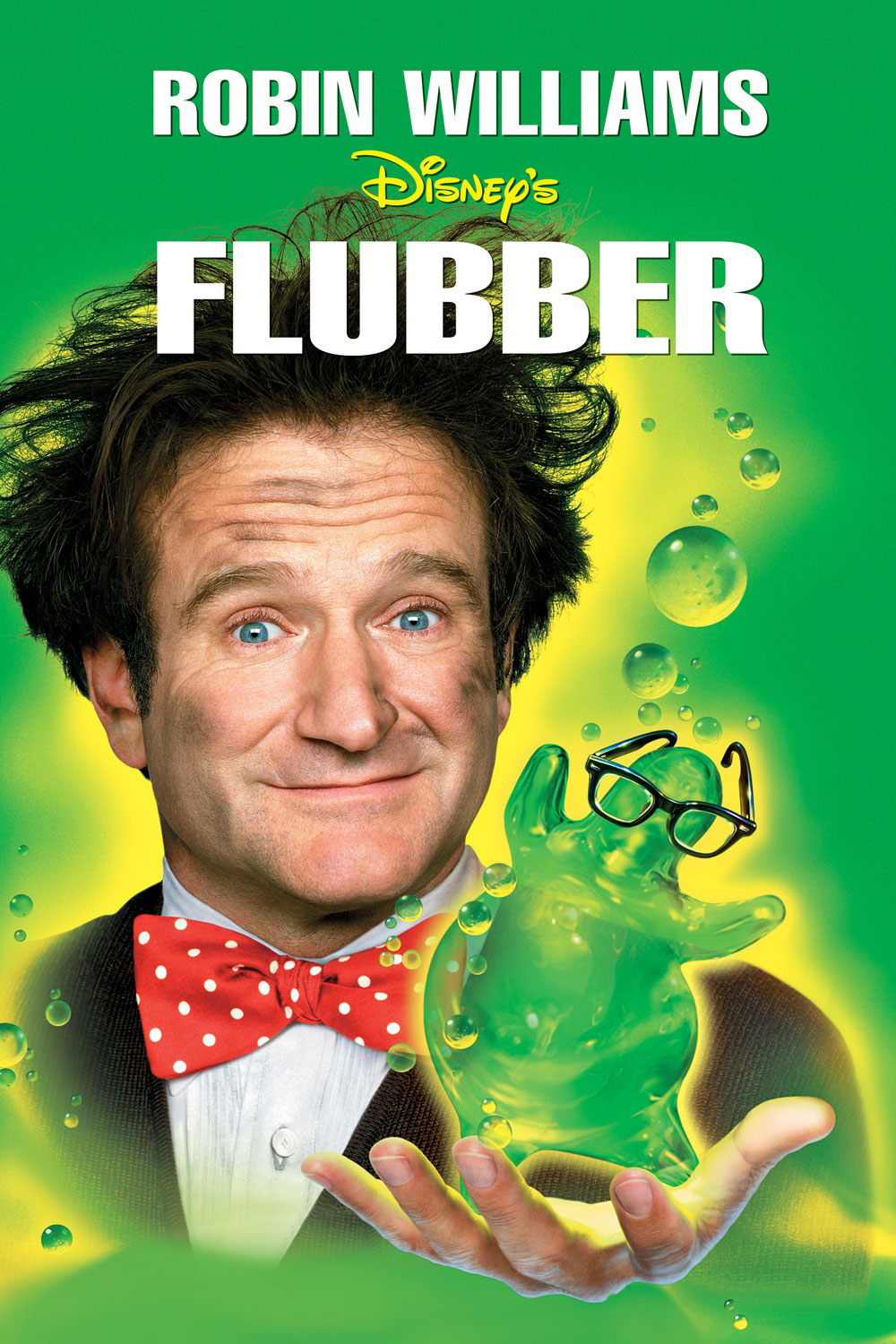
this assignment reminds me of the timeless classic, Flubber. A scientist, inpursuit of new energy sources, stumbles
upon a rubber form of artificial life. This substance, though man-made, has a
personality and emotion and in many ways is a work of art. Although a mediocre
film, Flubber is an excellent example
of how robotics effects art. Whether it is mass production in the 1400s, technical
reproduction in the 1900s, or artificial life in the 2000s, machinery that can
out-perform humans can often impede upon humanity’s greatest fruit; creative
expression.
Works Cited
Flubber. Dir. Les Mayfield. Perf. Robin Williams. Walt Disney Pictures, 1997.
DVD.
Kreis,
Steven. "The Printing Press." The History Guide, 13 Apr. 2012.
Web. 17 Apr. 2016.
"My
Creations, a New Form of Life." Theo Jansen:. Ted, Mar. 2007. Web.
18 Apr. 2016.
Benjamin,
Walter. Illuminations: Essays and Reflections. Ed. Hannah Arendt. Trans. Harry Zohn. New York:
Schocken Books, 1968.
Douglas Davis Leonardo, Vol. 28, No.
5, Third Annual New York Digital Salon. (1995), pp. 381-386.
Images:
Theo Jansen Ted Talk:
Friday, April 8, 2016
Da Vinci the Nerd
This week’s lecture and
reading were enlightening about the connection between Math and Art. Linda
Henderson’s article about the 4th Dimension and Non-Euclidian
Geometry in Art further hammered home Artists dependence upon Math to be
successful. I particularly enjoyed Henderson’s description of French Surrealist
painters in the 1930s who notably employed non-Euclidian geometry in their work.
French Surrealism is one of many examples of how Math infiltrates Art.
Perhaps the best example
of the Third Culture is Leonardo da Vinci. He was the ultimate Renaissance man.
On the one hand, he studied math and science, but he also painted the Mona Lisa and The Last Supper. I was most interested in the Golden Ratio. This
technique used in painting was found to be particularly aesthetically pleasing,
and The Last Supper is a great
example. This 1: 1.618 ratio is found all over nature, and Da Vinci used it to
call special attention to Jesus amongst the twelve disciples. The Golden Ratio,
Phi, is a solution to the quadratic equation. For thousands of years
mathematicians and artists alike have explored the numerous places this number
is found.
In school we are often taught that painters’ work is inspired by
some emotional
connection or based on the artists own life, which often is
true. This week’s
lecture opened my eyes to how artists use left-brain concepts in
their creative
pieces. Da Vinci and others may be inspired by artistic
influences to paint
masterpieces, but it is their mastery of mathematics that
make the paintings famous.
"Euclidean and Non-Euclidean Geometry." Euclidean and Non-Euclidean Geometry. Web. 08 Apr. 2016.
Henderson, Linda Dalrymple. "Leonardo," Vol. 17, No. 3. (1984), Pp. 205-210. Web. 8 Apr. 2016.
History.com Staff. "Leonardo Da Vinci." History.com. A&E Television Networks, 01 Jan. 2009. Web. 08 Apr. 2016.
"What Is Phi? (The Basics of the Golden Ratio)." The Golden Ratio Phi 1618. N.p., 16 May 2012. Web. 08 Apr. 2016.
Images:
http://all-that-is-interesting.com/wordpress/wp-content/uploads/2012/01/the-son-of-man.jpg
http://www.goldennumber.net/wp-content/uploads/2012/06/last-supper-phi-golden-ratio.gif
http://cp91279.biography.com/1000509261001/1000509261001_2083614505001_Bio-Biography-Leonardo-da-Vinci-SF.jpg
Subscribe to:
Posts (Atom)